Housing, Care Coordination and Behavioral Health: Understanding Access Challenges in Western North Carolina w/Nina Marie Collins - WNC Health Policy Podcast Ep. 28
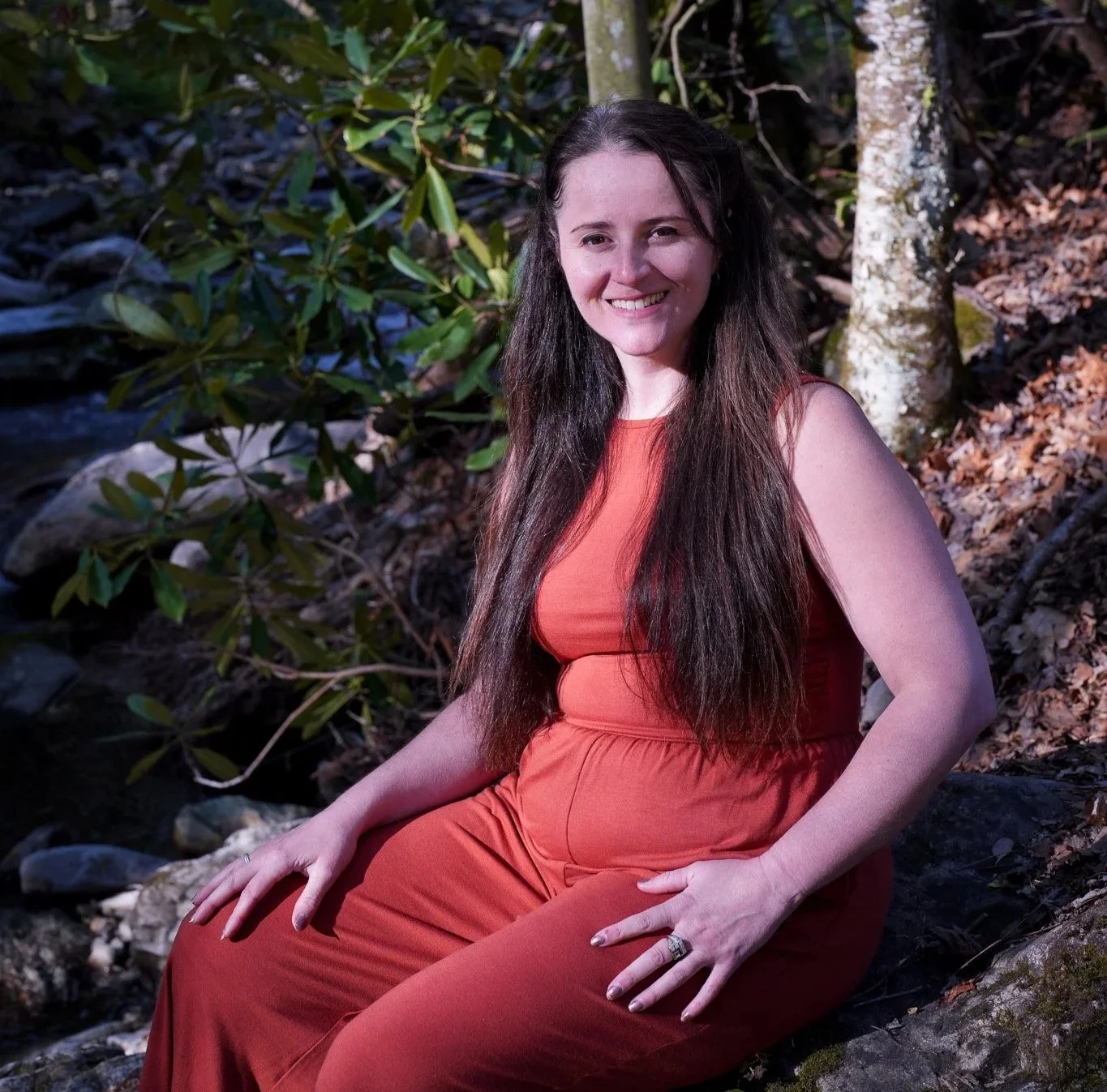
Image Credit:
If Western North Carolina wants to improve mental health and substance use outcomes, the policy question isn't just “Do we have services?”
It's also: “Can people and providers actually navigate the system to reach them?”
In a previous episode of the Western North Carolina Health Policy Initiative podcast, we discussed workforce shortages, reimbursement, and fragmentation with a clinician working in Buncombe County.
In this episode, we build on that conversation from a different vantage point by speaking with Nina Marie Collins, who has spent about a decade working in behavioral health—including as a peer support specialist and now supporting transitions to community living across several Western North Carolina counties. Her perspective highlights some of our region’s publicly funded behavioral health care coordination, how housing and transportation affect access, and how differences between counties can shape what services are actually available.
It also raises some important policy questions, such as:
How do we make publicly funded behavioral health systems easier to navigate?
How can credentialing and administrative requirements protect quality without discouraging providers from participating?
How should rural communities address major differences in service availability?
What happens to access when Medicaid policy changes?
And how do housing and other basic conditions fit into our definition of mental health care?
Those questions matter even more as North Carolina adjusts to the opportunities created by Medicaid expansion while confronting significant federal changes to Medicaid funding and eligibility (pdf, “Medicaid Overview and Implications of Federal Cuts,” NC Rural Center)
The takeaway from this conversation centers on how behavioral health outcomes depend on how well the pieces connect—providers, managed care, Medicaid, housing, crisis services, hospitals, community organizations, and the people trying to navigate them. Listen to the latest episode to hear Marie's perspective on what those connections look like on the ground—and where there is room for policy to make them work better.
Note: Marie Collins is speaking from her professional and personal experience and is not speaking on behalf of Vaya Health.
Listen via the audio bar above, or via Apple Podcasts or Spotify
About the WNC Health Policy Podcast: In each installment, we speak about different public health strategies for improving health and well-being in Western North Carolina (WNC). The WNC HPl is a collaboration between the NC Center for Health & Wellness at UNCA and MAHEC, with generous support from the Dogwood Health Trust.
Individual opinions, findings, conclusions, or recommendations expressed in this podcast are those of the author(s)/interviewee(s) and do not necessarily reflect the view of the WNC Health Policy Initiative or its host institutions of the University of North Carolina Asheville (UNCA), Mountain Area Health Education Center (MAHEC) or our funders.
Transcript
AR: Andrew Rainey
NC: Nina Marie Collins
[spacey atmospheric music]
Andrew Rainey: Mental health and substance use are some of the biggest public health priorities named across Western North Carolina, with all counties looking for different ways to address it. In a previous episode, we spoke with a clinician working in Buncombe County about some of the barriers shaping access to care, including workforce challenges, low reimbursement rates, and the fragmentation that can make navigating mental health care difficult for both providers and residents. Today on the Western North Carolina Health Policy Initiative podcast, we're continuing that conversation from a slightly different perspective.
Marie Collins brings a decade of experience in the field, including work as a peer support specialist and her current role in transitions to community living across multiple counties in the region through Vaya Health. She offers insights into how systems connect, or sometimes don't, and a little background on our region's public mental health care system. As a note, she is not speaking on behalf of Vaya Health in this piece.
AR: Hi Marie, can I first have you introduce yourself?
Nina Marie Collins: My name is Nina Marie Collins and I have worked in the mental health field in Western North Carolina for about 10 years and I've been a yoga teacher since 2010.
AR: Okay, cool, so about a decade in the mental health field. And I mean, yoga could be considered a part of that too. Could you tell us more about the kinds of roles you've had?
NC: Yeah, absolutely. So I first was hired in a mental health job as a peer support specialist.
AR: For folks who don't know, what is a peer support specialist?
NC: A peer support specialist is someone with lived experience of mental health challenges that has been in recovery for a year. I think that's changing soon. I think it's going to be a year and a half. But after demonstrated recovery for that period, there is an option of going through a training and it's a 50-hour training, very affordable, and then you get certified as a peer support specialist. The only education requirement is high school.
So I got my certification right after I graduated from my public health undergrad degree, and also moved back to Asheville around that time, so was able to start working. I got hired as a peer support on a crisis team. It's called an assertive community treatment team. So that was like trial by fire a little bit. I had never worked one-on-one with people before, and it was a very formative experience.
And so, at that time, I got a lot of supervision and guidance from my team lead, learning how to work with the population that I serve now, which is adults with severe and persistent mental illness (SPMI). That moniker is related to the types of diagnoses, although it's pretty broad for my current role.
On the ACT team, we were only able to serve a narrow window of people, schizophrenia, bipolar disorder, schizoaffective, mostly. In my current role, I'm working with adults that have either one of those diagnoses or it's also folks that have a major depression diagnosis, have a PTSD diagnosis. And the folks that I work with right now, because of working in the Transitions to Community Living program at Vaya Health, are identified as being eligible for independent living. People who are living in facilities like the state hospitals or adult care homes, or folks that are houseless or that are in transitional housing situations. But all are adults and they all have those SPMI diagnoses.
AR: You had mentioned yoga too at the beginning. Can you tell us more about that?
NC: In terms of who I work with, my yoga teaching, I started my business, which is called Spectrum Yoga, with the idea of working with the population that I was serving in the role in the crisis team and also in my experience in private mental health care. That was actually my first experience teaching yoga to folks with mental health diagnoses, was working in a private facility that I worked.
But it has evolved. So I teach right now just a studio class at Weaverville Yoga, and then I do teach sometimes one-on-one, but it's ended up being not necessarily the population that I started with the idea of wanting to work with. So I'm still looking for ways to grow where I could offer my yoga teaching in ways that would be reasonable to the population that I want to serve.
AR: Many people's understanding of yoga comes from snapshots in social media or ads where the focus is often on poses or flexibility. As an instructor, you've seen what the practice looks like beyond those first impressions. How do you describe yoga's role in supporting mental and emotional well-being?
NC: A lot of the yoga practices originated in order to balance the nervous system and prepare it for meditation. And then over time, the audience has changed, obviously. In the early 1900s, we got yogis coming over from India and surrounding areas teaching in America. And there were a lot of cultural moments where like Western culture met that. And so we got some of these more ostentatious postures because it got crossed with gymnastics. So a lot of the stuff that you see on Instagram or that you think of as yoga is really not the way that yoga originated.
There is a movement within yoga teaching with more intentional practice and intentional sequencing - you can balance the nervous system. And so mental health challenges are intimately intertwined with the health of the nervous system. So when we teach in a mindful way. And when we teach in a way where we're slowing down, doing more than just stretching our hamstrings, there's innumerable benefits to nervous system regulation, which really leads to emotional regulation.
Both my 200-hour yoga teacher training and my 500-hour teacher training were with Kristine Kaoverii Weber. She was very mindful of and interested in working both with people that may have chronic physical health conditions or chronic mental health conditions. She's worked on the federal level with integrative health.
AR: That was the Integrative Health Policy Consortium. It's a national nonprofit founded in 2001 by a coalition of healthcare professionals, public health leaders, and policy experts interested in integrating conventional and complementary healthcare. The organization advocates for federal and state policies that invest more in prevention, lifestyle, and non-drug approaches to care, and broader recognition and insurance coverage for licensed integrative health professionals. It also supports increased federal research on integrative health and policies that it says would expand patient choice in healthcare.
NC: And so her teacher trainings are really helpful in teaching us how to work with folks with mental health challenges. So in mental health accessibility, teaching to mental health populations, trauma-informed teaching. and teaching in settings where we would run into mental health populations. In patient hospitals or community-based mental health agencies, which is, was my experience when I first started working in the mental health field, we were taught how to teach in those environments and how to teach to folks who have some of these diagnoses.
My experience working in the private mental health program teaching was I felt really equipped to work one-on-one with some of our folks, knowing that there's certain things that you kind of have to set up the class. Like, I always do a disclaimer in the beginning. If you need to get up, get a drink of water, use the bathroom, take a walk, change the temperature in the room. Open the blinds, close the blinds, you do whatever you need to do. If you don't feel safe in a moment, take care of yourself. And that's one of the things that we learned in my teacher training that can be helpful for folks with PTSD or other mental health diagnoses.
AR: So you've had a variety of experiences in the mental health field in Western North Carolina, public health education, as a peer support specialist on an ACT team at a therapeutic residential community, and now at Vaya supporting transitions into community living. For folks who don't know Vaya Health, could you break down where it stands in Western North Carolina's mental health care landscape?
NC: Yeah, Vaya is one of four, they're called Licensed Management Entities/Managed Care Organizations. I'm gonna preface by saying this is complex, so I'm gonna try to use the slimmed down version of some of the definitions. But the Vaya mission statement is, “We manage publicly funded care for individuals with a serious mental health condition, severe substance use disorder, intellectual developmental disability, or traumatic brain injury, along with the medical, behavioral, and non-medical drivers of their health.”
AR: So, Vaya Health oversees publicly funded behavioral health services across a 32-county region, including much of Western North Carolina. But since recording this conversation, they also now have a separate role serving as the NC ROOTS Hub Lead for Region 3, a different 12-county region in the foothills towards Charlotte.
Impact Health, who previously and now again is operating the Healthy Opportunities pilot for Western North Carolina, is the ROOTS Hub for Western North Carolina. There will be, no doubt, some overlapping work between the two.
NC: So we manage the care, we don't provide it. So we manage public mental health services in those 32 counties, and then we manage the funding that comes down—some from federal, some from state, and some actually locally—to fund these services. So a big chunk of that is Medicaid, but there are other funding sources too. And we actually serve underinsured and uninsured people with a separate health plan.
It's run like a private entity, but it's technically public and its mission is a public purpose. So it's really interesting. It's unusual. It was smaller and it was only Western North Carolina, but we had a merger back in 2023, I think.
AR: So Vaya helps coordinate publicly funded mental health, substance use, and disability services across a large region of North Carolina, including much of Western North Carolina. While that footprint is pretty broad, your work at Vaya focuses on a smaller part of the region. What area do you serve?
NC: Personally, I work with the counties surrounding where I live. I go to see people in Henderson County, Buncombe, Madison, and some in McDowell. But my coworkers on my team, some of them are down in Orange County and Alamance County. We work with two state hospitals...we cover Broughton and Central Regional Hospital.
AR: So y'all are spread out over that whole range, but you're primarily in the middle of Western North Carolina, although Madison County to McDowell is over 50 miles an hour by car. I know it's not unusual, but important to highlight, I think.
NC: Yeah, it works out. They reimburse our mileage, which is wonderful. It's always been a part of working in the mental health field for me, because when I was on the crisis team, my folks were in Buncombe and surrounding counties, but a lot of them were houseless. And so we would like drive to downtown and then go on foot looking for people. And so it's just, I'm just used to it.
AR: Yeah, without housing or transportation, an hour on the road can mean something different. And more difficult. Can you tell us how folks might access services with Vaya?
NC: Anybody can call our member access line. A really good benefit is that we also have a crisis line available to anyone in the community and you can be served by by a clinician on that crisis line, whether you're a Vaya member or not.
If you were to call member services and say like, this is my insurance and it happens that you have Healthy Blue as your Medicaid provider, then we would find the number for Healthy Blue and have you call them. But if it's one of the health plans that we manage, then we would start looking on the provider level, like what service do you need, what providers are there within the closed network that provide those services in your area.
It can be confusing, so that's why I feel so grateful for the opportunity.
AR: Yeah, care coordination is one way to address a challenge we see across healthcare. Services are often fragmented with different providers, clinics, and specialties focused on separate parts of a person's care and limited opportunities or financial incentives to work together. We touched on this in a previous episode and actually we'll explore it further in an upcoming conversation with the No Wrong Door for Support and Recovery in Macon County.
However, beyond fragmentation, what are some of the other challenges facing mental health care in Western North Carolina today? Yeah.
NC: Great question. I will always say that it's provider staffing and provider availabilities. The staffing is more what I've seen in my roles, because I interact with the teams, like the ACT team that I worked on. ACT is Assertive Community Treatment. And then CST is Community Support Team. And then there are other types of community-based mental health services, and those are public. So for folks that have Medicaid, those are really good options if you have one of those severe and persistent mental illness diagnoses.
For CST, it's a much wider ranging criteria. They work with people with substance use disorder, folks with depression, anxiety, and have certain eligibility criteria. But the kind of larger issue is keeping people in those roles. When it comes to public mental health care, I have witnessed a lot in working in public mental health that staff come and they try those jobs and then they're underpaid and they're overstressed and they don't have good management or good supervision and then they leave. So there's a lot of turnover within those services.
Also, there's the larger access issue for public mental health of providers wanting to credential with Medicaid. Unfortunately, what we do when we manage the public mental health services at Vaya is we put providers through a lot to credential as a closed network provider. So I just had an experience where one of my members got a notification of denial letter for Vaya services and it was because her CST team lost their credentialing. And so as a community mental health provider, you have to keep up with being credentialed with Medicaid, and if you don't, then you lose your status and then you can't bill anymore and that's immediate. And so that's immediately like lost funding.
So anyway, the whole point is that there's a provider shortage in the public mental health realm, both with staff and then on the provider availability level.
AR: We heard something similar in a previous conversation with a clinician that low Medicaid reimbursement rates can make it difficult to recruit and retain providers. Now I'm hearing another policy-related challenge around the Medicaid credentialing process. It seems there's a balance to strike, maintaining quality and accountability while reducing unnecessary administrative burdens. When providers already face limited incentives to participate, simplifying that credentialing process without lowering standards seems like one practical way to improve access by keeping interested providers.
NC: Yeah, it's a huge gap. It's a huge place, I think, for improvement. Yeah.
AR: Earlier, we mentioned how geography can be a real barrier to healthcare in Western North Carolina. Can you talk more about what that looks like for mental health services?
NC: Yeah. So, the big discrepancies that I've seen when I've been working in this role with transitions to community living is by county. Buncombe County has maybe, like four, five options for ACT and CST teams. Transylvania County for most of 2024 didn't have any ACT teams. And so, for my program, my members have to be connected to an ACT or a CST team before they can move forward with their housing voucher. And for people that we got referred in Transylvania County, there was nothing that we could do. We just had to wait until a provider, you know, got credentialed again.
I would say rural versus more urban. Asheville isn’t the most urban place in the country, but it's urban compared to some of our neighbors. I will say that I've seen more providers coming online in the last like 8 months. There's a few new ones. Like there's the ones that have always been there that I know to refer to, and then there's these new ones coming online. So that's a good sign.
And then just in terms of public mental health services, like generally the people that we serve are lower socioeconomic status for the most part. There is just a gap in who is accessing our services. There's nothing wrong with that. It's not like the services are a lower quality or anything like that in my experience, but there is a socioeconomic gap between public and private mental health services in the counties and the agencies that I've worked in and seen.
AR: Many people hear about public and private mental health care. How do those systems differ from your perspective?
NC: Yeah, it's something I'm so curious about because I've seen more of the public side in my career, but I've been served more by private mental health services. I feel grateful that I had the opportunity to have that experience when I was younger and I needed care.
I think one of the big differences is that people generally in the middle class aren't aware of public mental health services. Like, as a peer support specialist, I usually have to explain what that is to people because it's in the public network. You know, there aren't private peer support specialists. And so I end up talking to a lot of people that are like, what is that? Or what's an act team? What is Vaya? Obviously it's confusing as I described it.
So there's a big gap in information. So when somebody has a mental health crisis, you Google it and there's this fragmented series of resources that come up if you search like mental health crisis help North Carolina. I certainly had that experience where I see that there are these private residential programs and then I see that there is, like ,UNC Hospital has an inpatient ward and same with us up here. So we have different private programs in Buncombe and surrounding counties that I know of, but then there's Sweeten Creek Mental Health and Wellness, which is HCA, but they accept Medicaid and Medicare.
And so you don't know where to go at first, and there are some resources that bridge the gap. Like, RHA has a mobile crisis unit and you can call them and they will come out and serve you regardless of insurance. That's a really great place to plug in the gap, but it's almost like the information is not getting across to people who are in need of the services and the time when they are. And a lot of people that I serve had trouble finding us. They were hospitalized first because they didn't know that they could call the Vaya crisis line and get connected to a provider soon. That's like actually the main gap that I've seen. Yeah.
AR: You've talked about how important coordination is when services are spread across the region, and you support that in Vaya Health's Transitions to Community Living Program. Can you explain what that looks like?
NC: Yeah, so we are really fortunate, especially in the Buncombe County limits to have different housing voucher programs and different nonprofits working on housing. And so TCL is specifically tailored towards people who are in the Medicaid system who are at poverty level guidelines, like they can't make more than a certain amount of money. And that is usually coming with the folks that I work with from disability checks. And then they have one of those severe and persistent mental illness diagnoses. And so those are the qualifications for working with transitions to community living. So it ends up being people in the Vaya system already and who are lower socioeconomic status.
And then there's two different teams. So one team works with folks that are unhoused or that are like in transitional situations, like living on somebody's couch. And then my team works with people that are in adult care homes or in the hospitals.
There is actually the program originated from a federal lawsuit about the Olmstead Act that said that North Carolina was housing too many people in those care homes who had mental health diagnoses and could be housed in less restrictive settings. So there was a settlement and North Carolina said, we're going to move 3,000 people out of these facilities into independent living. That settlement ended in 2022, but the program has continued, which is really cool. So it's like a priority for the North Carolina DHHS and the DOJ, which was originally who brought the lawsuit. So we get to move those people who are interested in moving. So I do have about half of my caseload who says no. When they get referred, they say, no, I want to stay. care home. But then I have my other half that says yes. So then my role is to get all their paperwork together so that we can get that voucher approved. So then they can take that voucher to landlord and say, here's my rent subsidy.
AR: Okay, so Vaya Health Transitions to Community Living Program helps adults with serious mental illness move into independent housing with some supports needed to stay stable and connected.
Some folks might not see housing as an essential part of mental health care. I wonder if you could talk about why housing and transitional living supports are such an important part of the mental health care landscape.
NC: This is something I learned about when I did my peer support training. What we use is a housing first model. So the idea is that when people are given that stability of a place to live, of shelter, then other aspects of their life and health can improve. That's what Vaya operates on. And so that's why we have the whole transition housing department so that people who have struggled in socioeconomic ways with their mental health diagnosis, with work, being able to hold study work to improve their socioeconomic status, they get housed, and then those other things with supports will improve. That's the way my program sees it.
You know, I certainly personally have had the experience, oh, the more stable my housing is, like, the better my mental health is. So I believe that. Not everybody does, but yeah.
AR: Even in North Carolina, recent evaluations from programs like the Healthy Opportunities pilot have shown that investing in housing stability is associated with reduced emergency room visits and hospitalizations. While housing is not a replacement for other supports, I hear that it creates the stability people need to engage in treatment, including for substance use and mental health. And that's where coordination across systems becomes so important.
NC: Definitely.
AR: With all the challenges and changes happening in mental health care, what are some of the things you're seeing that give you hope for the future?
NC: I think it takes all kinds. Like it takes private providers, it takes those private residential programs, it takes the crisis services that serve everyone. It takes the hospitals and it takes folks like Vaya to all work together to make sure that anyone in crisis or having like first episode psychosis or first episode depression or anything of that nature can get the help that they need.
I guess short answer is more resources. One thing that is positive that I see as hopeful is Medicaid expansion, which happened in our state in December 2023. There's been like 650,000 new Medicaid enrollees since Medicaid expansion started, which means those people have access to all these services I've been talking about through Vaya and the CST teams and the ACT teams, whereas they likely were underinsured or uninsured. And a lot of that population is younger, like 29 and younger that are being served now with Medicaid expansion. So resources like that is what we need and also what I see on the public side and being improved. That's what I find hopeful. Obviously we have some dynamics in the last year that are scary and cut the funding, but there are positive things going on.
AR: Right. Medicaid is one of the largest funders of mental health care in North Carolina. And as you mentioned, Medicaid expansion increased access to care for many people across the state when that came through a few years ago.
At the same time, the recent federal budget legislation, the One Big [Beautiful] Bill Act, creates uncertainty for the behavioral health system through Medicaid cuts and increased administrative burdens. One rough estimation is that some 250,000 North Carolinians could lose Medicaid beginning of the new year. That same legislation also created the Rural Health Transformation Program, which provides short-term funding to strengthen rural health systems and improve coordination, though it does not replace broader funding concerns.
In Western North Carolina, this highlights the importance of collaboration across organizations. Vaya will continue its behavioral health role across its service area, including helping people to mental health services throughout the region, while also serving as a ROOTS Hub Lead for Region 3. Impact Health serves as the ROOTS Hub Lead for Region 1 in Western North Carolina. So this creates opportunities for these organizations and others to work together where we live.
NC: Yeah, absolutely.
AR: We've talked about a lot today. Could you tell listeners where they can learn more about Vaya and some of the other resources and programs you've mentioned?
NC: Yeah, absolutely. So grateful for the opportunity to talk about it. The Vaya Health website is just vayahealth.com and that will lead you to that list of providers. It'll also give you the member services number where you can call to get connected to a provider, like I mentioned.
AR: And that could be a helpful resource both for folks looking for care and for providers who are trying to connect people with the right supports.
NC: And my website is www.spectrum-yoga.com and my offerings are on there. And I also have a free newsletter that includes some of the practices for free and free tips.
And then if you're interested in peer support or getting certified, just Google Behavioral Health Springboard. It's bhs.unc.edu and that'll give you a bunch of resources with peer support.
AR: Marie, thank you so much for joining me and helping us better understand some of the challenges and opportunities in mental health care across Western North Carolina.
NC: Yeah, thanks so much, Andrew. I really appreciate talking.
[twangy electronic music]
AR: As housing is one determinant of mental health, you can listen back to past HPI podcast episodes to learn more about upstream interventions. From our conversations with the Healthy Opportunities pilot in episodes 6, 10, 11, and 25, more about the cost of the One Big [Beautiful] Bill for Western North Carolina in episode 15 with Pisgah Legal Services, and episode 22 with NC Health News reporter Jamie Baxley. There's also more about national efforts to address care fragmentation in episode 20 with Christina Bowen and the Administration for Community Living. And to hear more about mental health in our region, you can check out the WNC Health Network's data stories at wnchn.org about several potential policy solutions from our podcast episode 27. And we'll have a new episode about mental health networking in Western North Carolina's Macon County featuring a conversation about the No Wrong Door for Support and Recovery Network.
This has been a production of the Western North Carolina Health Policy Initiative podcast, a collaboration between the North Carolina Center for Health and Wellness at UNC Asheville and the Mountain Area Health Education Center, with support from the Dogwood Health Trust.
You can find more episodes of the HPI podcast on Spotify or Apple Podcasts, where we speak about different public health strategies for improving health and well-being in Western North Carolina.
Individual opinions, findings, conclusions, or recommendations expressed in the podcast are those of the participants and do not necessarily reflect the view of the Western North Carolina Health Policy Initiative or its host institutions of UNC Asheville, the Mountain Area Health Education Center, or our funders.
Music from this episode included the tracks Thrum of Soil and Highway 104 by the Blue Dot Sessions. Found on the Free Music Archive under License Attribution International, CC BY 4.0. From the Western North Carolina Health Policy Initiative, I'm Andrew Rainey. Thanks for listening.