
UNC Asheville Hosts State Policy Makers and Regional Health Leadership at 2026 WNC Health Policy Initiative Legislative Summit
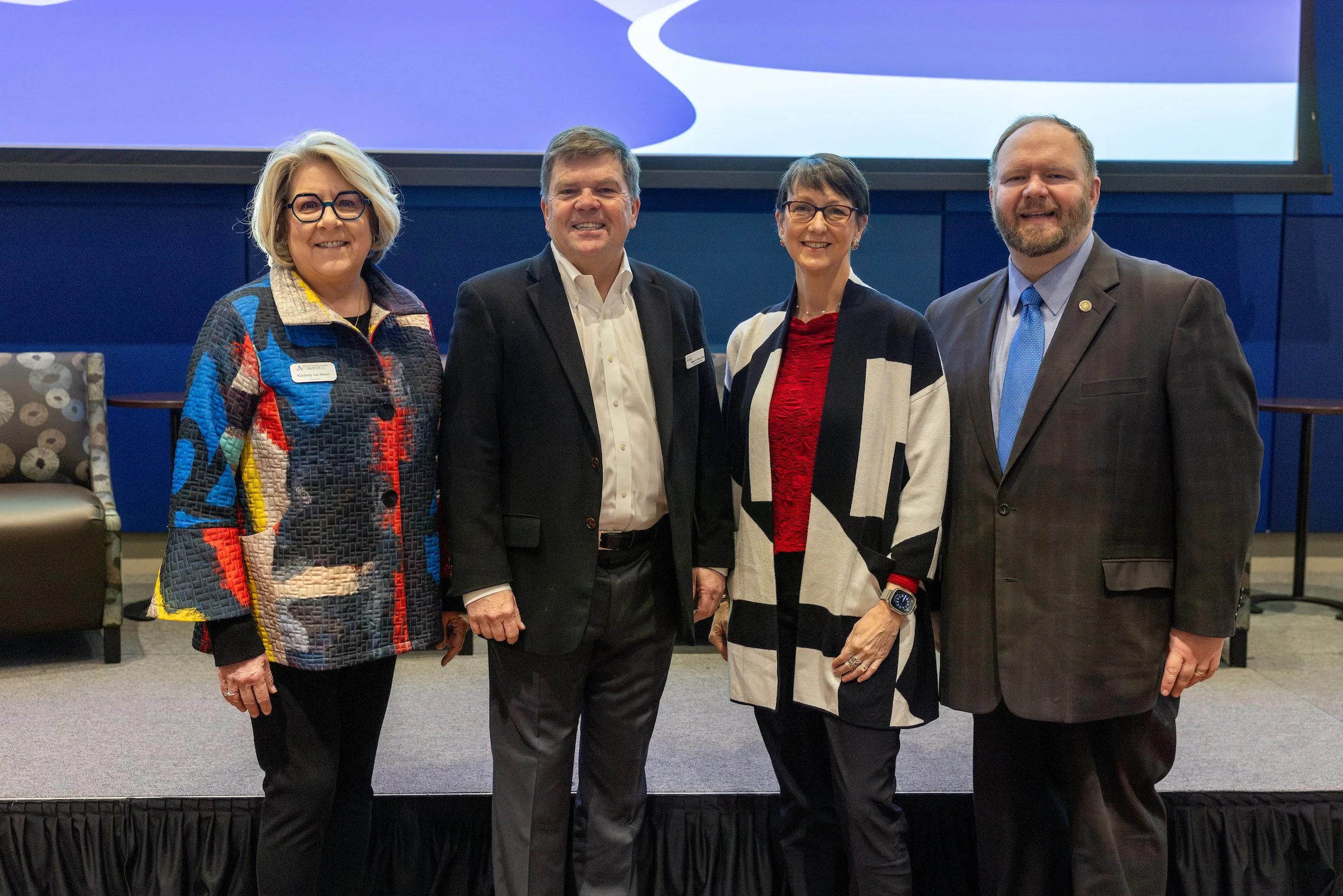
R-L: Opening speakers Chancellor Kimberly van Noort, Dr. William Hathaway, and Dr. Susan Mims, along with panel moderator NC Sen. Ralph Hise. Photo credit: Emmanuel Figaro, UNCA
The University of North Carolina Asheville hosted the fourth annual WNC Health Policy Initiative Legislative Summit on Friday, March 13, featuring remarks from North Carolina Lt. Gov. Rachel Hunt, keynote address by Laurie Stradley, CEO of regional health-related social needs leader Impact Health, and a panel of state policymakers and agency heads. The summit included more than 100 healthcare, nonprofit, academic, and government leaders from across Western North Carolina to discuss the region’s evolving healthcare landscape. It highlighted UNC Asheville’s role as a regional leader committed to fostering collaboration and advancing solutions that benefit Western North Carolina in partnership with regional health and healthcare organizations and leadership.
The summit was organized by the WNC Health Policy Initiative of the NC Center for Health and Wellness at UNC Asheville, in partnership with the Mountain Area Health Education Center (MAHEC). Funded by Dogwood Health Trust, it focused on building rural health resilience, workforce sustainability, and policy challenges affecting the region.
Visit the 2026 WNC Health Policy Legislative Summit event page for event information, policy issue 1-pagers and other resources.

NC Lt. Governor Rachel Hunt addresses summit attendees. Photo credit: Emmanuel Figaro, UNCA
“When you have people from healthcare, universities, nonprofits and government all in the same room, that’s when real progress starts to happen,” said Lt. Gov. Hunt, in her welcoming remarks. “Access to care, workforce development, and community health systems are all part of building a state that’s prepared for the future.”
UNC Asheville Chancellor Kimberly van Noort opened the summit along with Dr. William Hathaway, CEO of MAHEC and Dr. Susan Mims, President and CEO of Dogwood Health Trust.
“When you invest in healthcare research capacity, you are investing in the economic vitality of every community in this region,” said Chancellor van Noort. “UNC Asheville’s Health Policy Research Consortium brings together institutions across Western North Carolina to generate the kind of evidence-based strategies that attract resources, inform policy, and drive measurable improvements in regional health outcomes and economic resilience.“

Laurie Stradley delivers the keynote address. Photo credit: Emmanuel Figaro, UNCA
The keynote address, “Transforming for Resilience: How Western North Carolina is Reimagining Rural Health,” was provided by Laurie Stradley, CEO of Impact Health, who highlighted innovative cross-sector partnerships and policy strategies advancing coordinated, prevention-focused care throughout the region. In her presentation, Laurie emphasized that, “Healthcare can’t survive in a flavor-of-the-month setting,” pointing our that innovative strategies, such as those like the Health Opportunities Pilot (aka HOP, overseen in Western NC by Impact Health prior to North Carolina’s budget-related program pause), don’t always mean “new, fresh,” but rather, “applying the lessons that we've Learned and what we know how to do.”
“Five years ago, six years ago, we didn't know if it was really possible to create a system of care that recognizes whole person health needs…This program invested $28.5 million in capacity building to strengthen this region and to make our safety net one of the strongest in the country…and in this process, we launched a small clinically integrated network that is locally driven and led by…our physicians in the region.”
Laurie concluded her address by noting that, “this is the beginning of a conversation, not the end,” and that Impact Health remained committed to keeping the conversation going to insure that the investments made in this region and the innovations created as a community would be built upon in the future.
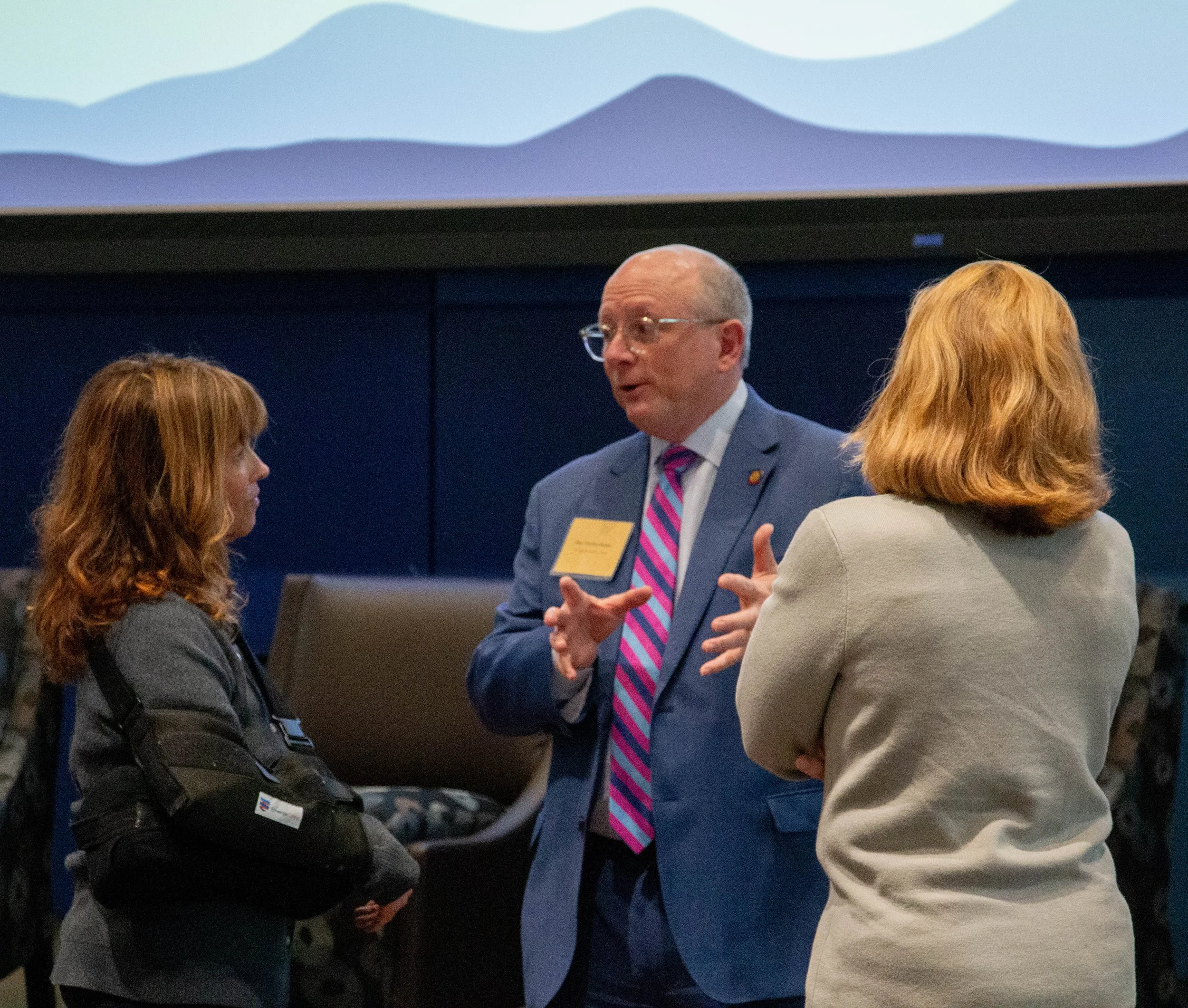
Summit panelist Sen. Timothy Reeder speaks with summit attendees. Photo credit: Michaela Lumpert, Impact Health.
A legislative and policy panel featured members of the North Carolina General Assembly and senior health leaders, including WNC Health Policy Initiative Expert-in-Residence Senator Ralph Hise; Representative Timothy Reeder; Senator Jim Burgin; Melanie Bush, Interim Deputy Secretary for the North Carolina Department of Health and Human Services; Katherine Martin, Vice President of Health Affairs for the UNC System; and Josh Dobson, President and CEO of the North Carolina Healthcare Association.
The panel touched on several health policy related topics, including the impacts to Medicaid by HR 1 (aka the “Big Beautiful Bill). The panel also answered questions about opportunities within the state’s Rural Health Transformation Program proposal to address critical health needs in WNC, lessons learned from COVID-19 and Hurricane Helene for building regional resilience, priorities and opportunities for addressing the healthcare workforce shortage, priorities for evaluating and sustainably funding pilot programs such as HOP, and the state’s response to federal funding cuts to SNAP and chronic disease management programs.
You can take a deeper dive into how these and other health-related policies are impacting WNC on our blog and podcast, and learn about current policy news on our Health Policy Updates page.

Environmental epidemiologist Jen Runkle speaks to a group of attendees during the HPRC breakout session. Photo credit: Michaela Lumpert, Impact Health.
After the panel, breakout sessions connected attendees with health policy researchers from UNC Asheville, Appalachian State University, Western Carolina University, and the WNC Health Network to provide input on research priorities that will inform future policy development and address identified regional health needs.
The researchers are part of the Health Policy Research Consortium (HPRC) (also funded by Dogwood Health Trust). HPRC is an inter-institutional collaboration to develop and implement a shared research agenda addressing factors that that influence health policy opportunities in WNC across four priority areas: food security, housing, mental health, and substance use. You can learn more abut HPRC’s work and their research at the link above.
The WNC Health Policy Initiative would like to extend our thanks and gratitude to all the numerous regional and statewide partners and contributors who made our work this year, and this event, such a success. Your support and leadership are deeply appreciated and we look forward to strengthening and building upon these connections in the future.
We would also like to thank our incredible sponsors of the Legislative Summit event: UNC Health Pardee, Appalachian State University, Western Carolina University and HCA Healthcare/Mission Health for their generous support of this event and the broader work of the WNC HPI.